
Updated: July 2026
Magnesium, in short
Magnesium is an essential mineral the body needs every day, found naturally in foods like leafy greens, nuts, seeds and wholegrains. Supplements come in several forms – such as glycinate, citrate and oxide – which differ mainly in how they dissolve and how they are used.
This guide covers what magnesium does, the common supplement forms like glycinate and citrate, how they differ, and how to choose one that suits you.
Walk down any supplement aisle and you will see several forms of magnesium, which can be genuinely confusing.
Here is a plain-English guide to what magnesium does and how the forms differ. For more, see our natural health and herbal tips guide.
UK-made colloidal silver, in dark glass
Double-purified water — reverse osmosis, then distilled — with real silver. Made in the UK.
What does magnesium do?
Magnesium contributes to normal muscle function, to the reduction of tiredness and fatigue, and to normal psychological function.
It is an essential mineral involved in many everyday processes in the body.
Magnesium also contributes to normal energy-yielding metabolism and to the maintenance of normal bones.
What are the different types of magnesium?
The common forms differ mainly in how easily they dissolve and how they tend to be used.
Forms you will often see:
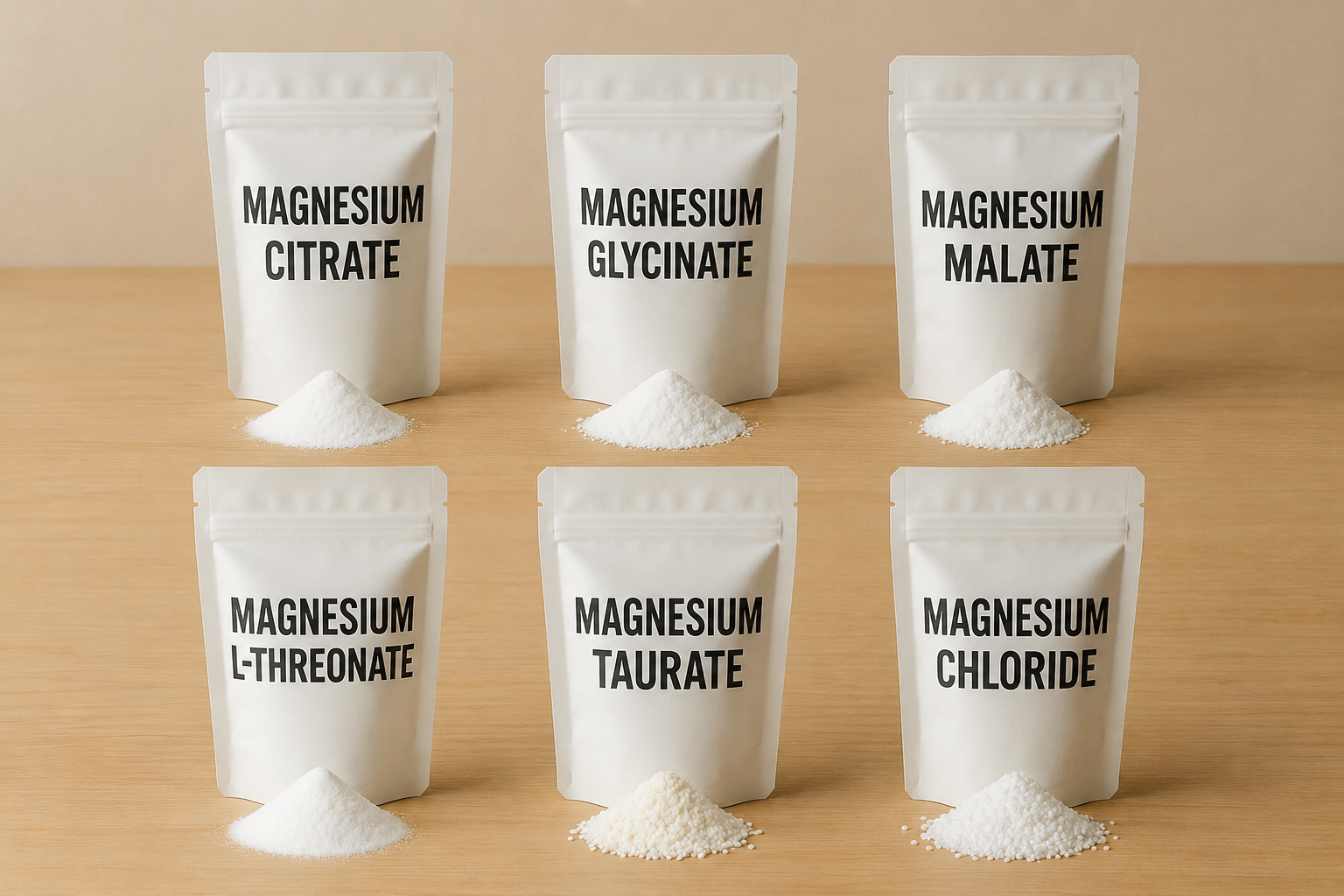
- Magnesium glycinate — gentle and well tolerated; many choose it for evening use.
- Magnesium citrate — highly soluble and widely available.
- Magnesium oxide — an inexpensive form common in general supplements.
- Magnesium chloride — often found in topical sprays, oils and bath flakes.
- Magnesium malate and L-threonate — two of several other options.
Which form of magnesium should you choose?
It largely comes down to preference and how you plan to use it.
Many people choose glycinate for a gentle, easily tolerated everyday option, and citrate when they want something highly soluble.
If you have any questions or existing conditions, a quick word with a pharmacist or your GP is always sensible.
Where do you find magnesium in food?
Plenty of everyday foods are naturally rich in magnesium, so food is the simplest starting point.
Good sources include leafy greens, nuts, seeds, wholegrains, beans and dark chocolate.
Pumpkin seeds in particular are a notably good source of magnesium.
Do you need a magnesium supplement?
Many people get enough from a varied diet, so a supplement is a personal choice rather than a must.
If you are considering one, read the label and pick a form that suits how you want to use it.
When in doubt, a pharmacist or your GP can help you decide what is right for you.
Buy more, save more
Build your own pack and save up to 15%, or pick a ready-made bundle.
Secure checkout · Made in the UK
Why buy from Health is a Choice
We make our colloidal silver in the UK, the way we would want it for our own family. We don’t purify our water once — we do it twice.
It is first cleaned by reverse osmosis, then distilled on top of that, before we suspend real silver in it and bottle it in dark glass — never plastic.
- Made and bottled in the UK
- Bottled in dark glass, never plastic
- Double-purified water: reverse osmosis, then distilled
- Available in 10, 100 and 200 ppm
- 100ml dropper, 100ml spray and 500ml refill
- Free Royal Mail Tracked 48 on every order
Related guides
Made in the UK · Dark glass, never plastic · Free Royal Mail Tracked 48
Last updated: July 2026
This article is for general information only and is not medical advice. We make no medical claims. If you have a health concern, please speak to your GP or pharmacist.