Updated: July 2026
Spirulina, in short
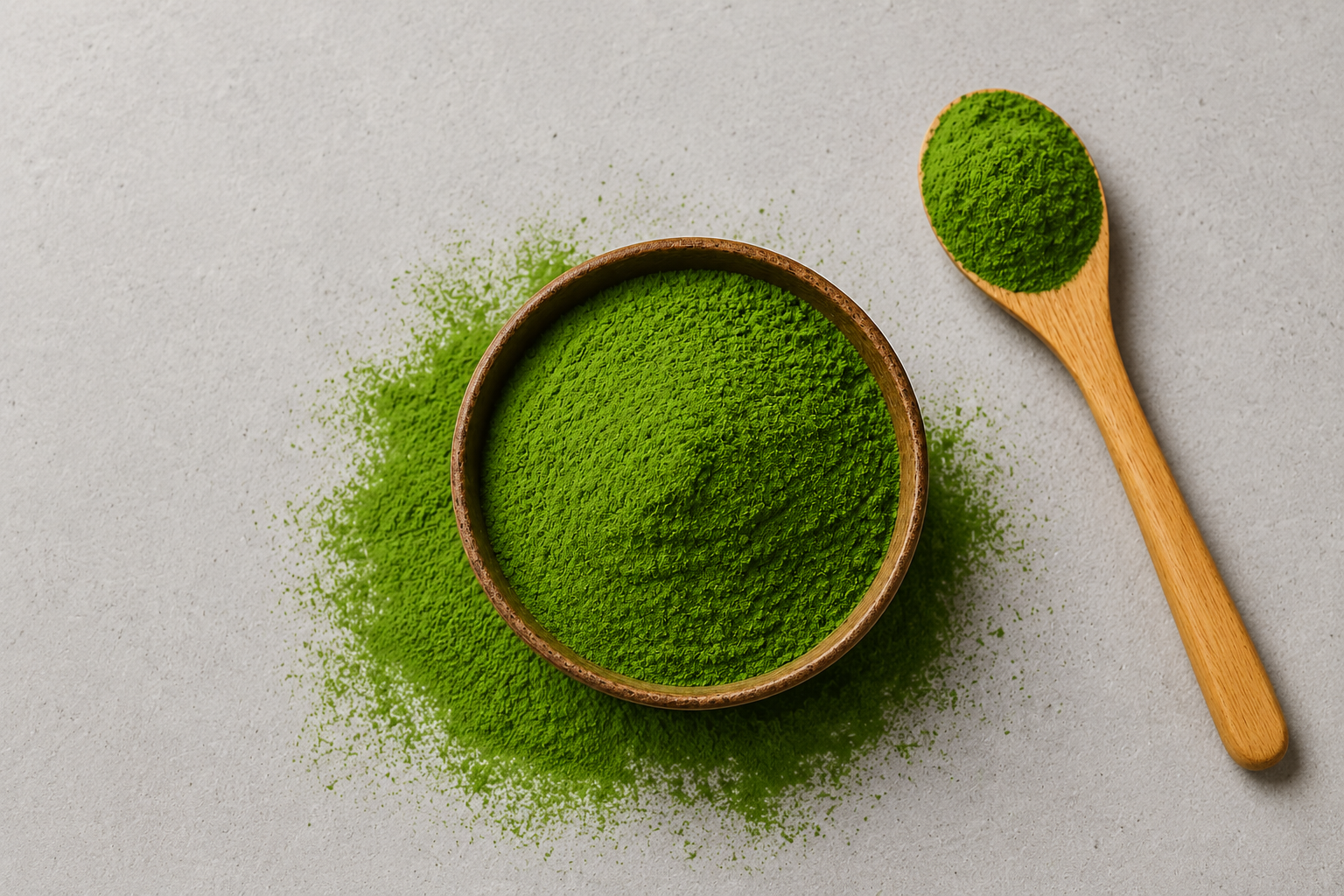
Spirulina is a deep blue-green algae grown in fresh water and dried into a powder or tablets. It is prized as one of the most protein-dense foods available, providing complete plant protein with all nine essential amino acids, along with antioxidant compounds such as phycocyanin.
This guide covers what spirulina is, why it is so protein-rich, what else it provides, how to use it, and its long history as a traditional food.
When most people think of protein they picture meat or fish – but gram for gram, spirulina is one of the most protein-dense foods on the planet.
Here are the questions people ask most. For more, see our natural health and herbal tips guide.
UK-made colloidal silver, in dark glass
Double-purified water — reverse osmosis, then distilled — with real silver. Made in the UK.
What is spirulina?
Spirulina is a deep blue-green algae, grown in fresh water and dried into a fine powder or pressed into tablets.
It has been eaten as a food for centuries and is valued today as a strikingly nutrient-dense ingredient.
Its vivid colour comes from natural pigments, including one called phycocyanin.
Is spirulina really high in protein?
Yes – spirulina is one of the most protein-dense foods there is, and provides all nine essential amino acids.
Gram for gram it carries far more protein than meat, though we tend to eat it by the spoonful rather than the plateful.
Protein contributes to a growth in muscle mass and to the maintenance of normal muscle mass and bones.
What else does spirulina provide?
Beyond protein, spirulina naturally provides iron and antioxidant compounds such as phycocyanin.
It is a genuinely nutrient-dense food for its size, which is a big part of its appeal.
Most people use it as a small daily boost rather than a main ingredient.
How do you use spirulina?
A teaspoon (around 3 to 5g) stirred into a smoothie or juice is the easiest way to enjoy it.
Its strong flavour blends best with fruit, so smoothies and juices are the usual home for it.
Start small, since a little goes a long way.
Has spirulina been eaten traditionally?
Yes – spirulina has a long history as a food, famously harvested from lakes by the Aztecs centuries ago.
It has been valued as a nourishing food across different cultures for generations.
It is a genuinely fascinating ingredient with real heritage – well worth reading up on if it interests you.
Buy more, save more
Build your own pack and save up to 15%, or pick a ready-made bundle.
Secure checkout · Made in the UK
Why buy from Health is a Choice
We make our colloidal silver in the UK, the way we would want it for our own family. We don’t purify our water once — we do it twice.
It is first cleaned by reverse osmosis, then distilled on top of that, before we suspend real silver in it and bottle it in dark glass — never plastic.
- Made and bottled in the UK
- Bottled in dark glass, never plastic
- Double-purified water: reverse osmosis, then distilled
- Available in 10, 100 and 200 ppm
- 100ml dropper, 100ml spray and 500ml refill
- Free Royal Mail Tracked 48 on every order
Related guides
Made in the UK · Dark glass, never plastic · Free Royal Mail Tracked 48
Last updated: July 2026
This article is for general information only and is not medical advice. We make no medical claims. If you have a health concern, please speak to your GP or pharmacist.