
Updated: July 2026
Black walnuts, in short
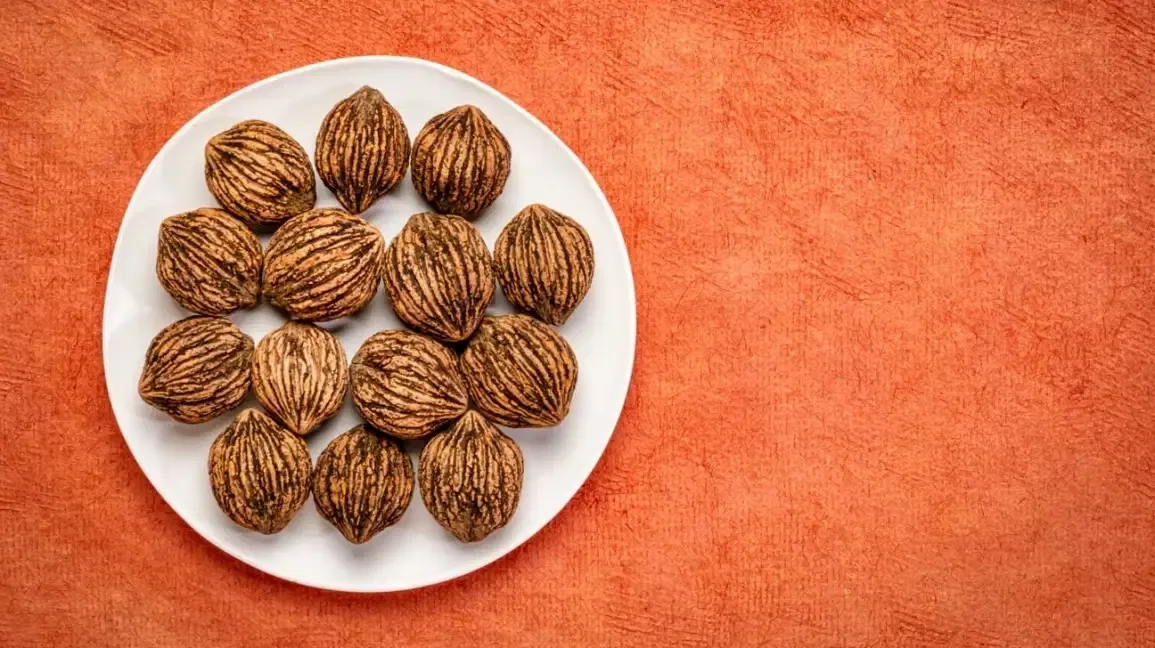
Black walnuts are the rich, boldly flavoured nuts of the black walnut tree, distinct from the milder English walnut. They have a harder shell and a deeper, earthier taste, and are naturally a source of plant protein, fibre, healthy fats and minerals.
This guide covers what black walnuts are, how they differ from common walnuts, their nutrition, how to use them, and their long traditional history.
Black walnuts have a bolder, earthier flavour than the everyday walnut, and a long history as both a food and a traditional ingredient.
Here are the questions people ask most. For more, see our natural health and herbal tips guide.
UK-made colloidal silver, in dark glass
Double-purified water — reverse osmosis, then distilled — with real silver. Made in the UK.
What are black walnuts?
Black walnuts are the nuts of the black walnut tree (Juglans nigra), a different species from the common English walnut.
They have a notably harder shell and a stronger, richer, earthier flavour.
They are naturally a source of plant protein, fibre, healthy fats and minerals.
How are black walnuts different from regular walnuts?
Black walnuts are bolder, earthier and harder-shelled than the milder, softer English walnuts most shops sell.
The flavour is the headline difference – black walnuts have a deeper, almost savoury intensity that stands up well in baking.
The tougher shell is why they are less common on supermarket shelves, and prized by those who seek them out.
Are black walnuts good to eat?
Yes – like other nuts, black walnuts are a satisfying, nutrient-dense food to enjoy as part of a varied diet.
They naturally provide plant protein, fibre and healthy fats, along with a range of minerals.
A small handful makes a genuinely filling snack.
How do you use black walnuts in cooking?
Their bold flavour shines in baking and wherever you want a deeper, nuttier note.
Popular ways to use them:
- Baking — chopped into cakes, breads, brownies and cookies for a richer flavour.
- Breakfast — scattered over porridge or yoghurt.
- Salads — for a crunchy, savoury topping.
- Snacking — simply on their own.
Have black walnuts been used traditionally?
Yes – the black walnut, and especially its green outer hull, has a long and colourful history of traditional use.
For generations the hulls were used in dyes, inks and folk practices, quite apart from the nut as a food.
It is a genuinely fascinating plant with a rich heritage – well worth reading up on if it catches your interest.
Buy more, save more
Build your own pack and save up to 15%, or pick a ready-made bundle.
Secure checkout · Made in the UK
Why buy from Health is a Choice
We make our colloidal silver in the UK, the way we would want it for our own family. We don’t purify our water once — we do it twice.
It is first cleaned by reverse osmosis, then distilled on top of that, before we suspend real silver in it and bottle it in dark glass — never plastic.
- Made and bottled in the UK
- Bottled in dark glass, never plastic
- Double-purified water: reverse osmosis, then distilled
- Available in 10, 100 and 200 ppm
- 100ml dropper, 100ml spray and 500ml refill
- Free Royal Mail Tracked 48 on every order
Related guides
Made in the UK · Dark glass, never plastic · Free Royal Mail Tracked 48
Last updated: July 2026
This article is for general information only and is not medical advice. We make no medical claims. If you have a health concern, please speak to your GP or pharmacist.