Updated: June 2026
Herbs through history
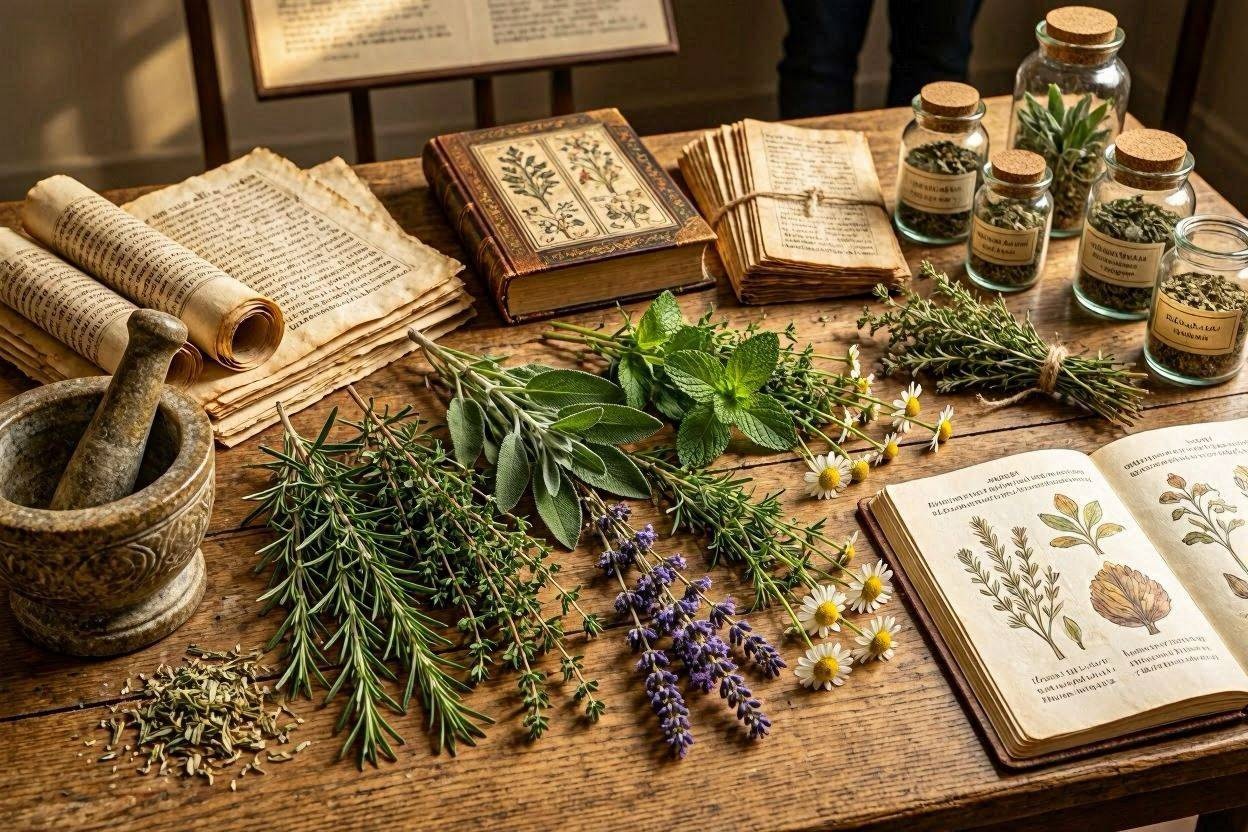
People have used herbs for tens of thousands of years — for food, ritual and traditional remedies. From the ancient Egyptians to Greek physicians and the Chinese and Ayurvedic traditions, herbal knowledge was written down and passed on across the centuries.
This guide covers herbs through history: how long people have used them, the ancient texts, which cultures, and whether they are still used today.
The story of herbs is really the story of people watching the natural world and writing down what they learned.
Here is that history in brief. For more in this vein, see our natural health and herbal tips guide.
UK-made colloidal silver, in dark glass
Double-purified water — reverse osmosis, then distilled — with real silver. Made in the UK.
How long have people used herbs?
For tens of thousands of years — long before anything was written down.
Traces of herbs such as yarrow and chamomile have even been found on the teeth of Neanderthals, which gives a sense of just how old the relationship is.
What was the Ebers Papyrus?
The Ebers Papyrus is an ancient Egyptian medical text from around 1550 BC, and it lists hundreds of herbal remedies.
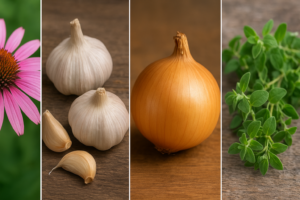
It names many plants we still recognise today, including garlic, coriander, aloe and frankincense, and it is one of the oldest written records of herbal tradition we have.
Which cultures shaped herbal tradition?
Four great traditions stand out, and between them they shaped most of what followed.
- Egyptian — recorded in texts like the Ebers Papyrus.
- Ayurvedic — from India, with an oral tradition thousands of years old.
- Chinese — gathered in early works such as the Shennong Ben Cao Jing.
- Greco-Roman — carried into Europe and through the Middle Ages.
Who were the famous figures in herbal history?
Hippocrates in Greece and the legendary Shen Nong in China are among the best known.
In medieval Europe, the Benedictine abbess Hildegard of Bingen wrote her own herbal text, while monastery gardens quietly kept the knowledge alive.
Are these old herbal traditions still around today?
Yes. Many are still practised, and some old traditions even helped shape modern medicine.
Willow bark, used in antiquity, later led chemists to aspirin. This is history and folklore rather than health advice, and we make no medical claims.
We share that long respect for the natural world in our own small way.
Our product is carefully made colloidal silver, produced in the UK and bottled in dark glass — sold for external use only.
Buy more, save more
Build your own pack and save up to 15%, or pick a ready-made bundle.
Secure checkout · Made in the UK
Why buy from Health is a Choice
We make our colloidal silver in the UK, the way we would want it for our own family. We don’t purify our water once — we do it twice.
It is first cleaned by reverse osmosis, then distilled on top of that, before we suspend real silver in it and bottle it in dark glass — never plastic.
- Made and bottled in the UK
- Bottled in dark glass, never plastic
- Double-purified water: reverse osmosis, then distilled
- Available in 10, 100 and 200 ppm
- 100ml dropper, 100ml spray and 500ml refill
- Free Royal Mail Tracked 48 on every order
Related guides
- Natural health and herbal tips: a practical guide
- The story of silver: from ancient vessels to modern day
- Simple natural swaps to try at home
- Colloidal silver: the complete UK guide
Made in the UK · Dark glass, never plastic · Free Royal Mail Tracked 48
Last updated: June 2026
This article is for general information only and is not medical advice. We make no medical claims. If you have a health concern, please speak to your GP or pharmacist.