Updated: June 2026
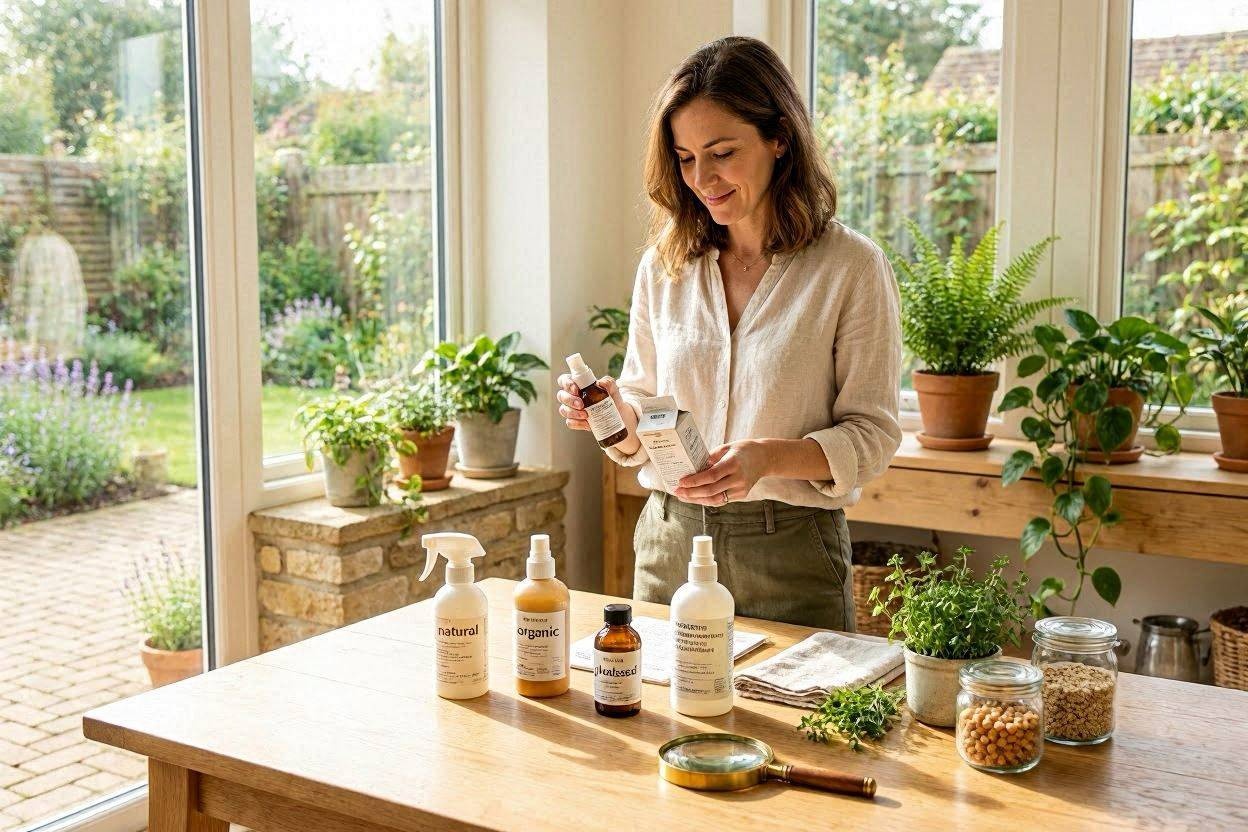
What “natural” means on a label
On a label, “natural” has no legal definition in the UK — so a product can be mostly synthetic and still use the word. It is a marketing term, not a guarantee. The real information is in the ingredient list and any genuine third-party certification.
This guide covers what natural really means on a label: whether the word is regulated, how it differs from organic, and what to look for on a label instead.
“Natural” is one of the most reassuring words on a label — and one of the least meaningful.
Here is what it does and doesn’t tell you. For more like this, see our natural health and herbal tips guide.
UK-made colloidal silver, in dark glass
Double-purified water — reverse osmosis, then distilled — with real silver. Made in the UK.
Does “natural” actually mean anything on a label?
Not much on its own. “Natural” has no legal definition for cosmetics in the UK, so a product can be mostly synthetic and still be sold as natural.
That doesn’t mean every “natural” product is misleading — only that the word alone is no guarantee. You have to look past it.
Is “natural” regulated in the UK?
No. There is no legal standard a product must meet to call itself natural.
Misleading claims in general are covered by consumer protection law, but the word “natural” itself isn’t defined or policed the way “organic” can be.
What’s the difference between “natural” and “organic”?
“Organic” can be certified and regulated, especially in food. “Natural” has no such backing.
Schemes such as COSMOS and ECOCERT set real criteria for what counts, and they are independently audited. A bare “natural” claim has none of that behind it.
How can I tell if a product is genuinely natural?
Ignore the front of the pack and look at the evidence on the back.
- Read the ingredient list — the back of the pack tells you far more than the word on the front.
- Look for real certifications — independent schemes like COSMOS, not a brand’s own green logo.
- Be wary of “fragrance” — a vague “fragrance” or “parfum” can stand in for many undisclosed ingredients.
- Don’t be swayed by “free-from” — or by leaves and green imagery, which prove nothing.
What does “fragrance” or “parfum” mean on a label?
It is a catch-all term that can cover many undisclosed ingredients, often synthetic.
A specific essential oil is named outright. A vague “fragrance” or “parfum” isn’t, so it tells you very little about what is actually in the bottle.
We would rather show our hand than hide behind a word.
Our colloidal silver has a short, honest make-up — real silver suspended in double-purified water — bottled in dark glass and sold for external use only.
Buy more, save more
Build your own pack and save up to 15%, or pick a ready-made bundle.
Secure checkout · Made in the UK
Why buy from Health is a Choice
We make our colloidal silver in the UK, the way we would want it for our own family. We don’t purify our water once — we do it twice.
It is first cleaned by reverse osmosis, then distilled on top of that, before we suspend real silver in it and bottle it in dark glass — never plastic.
- Made and bottled in the UK
- Bottled in dark glass, never plastic
- Double-purified water: reverse osmosis, then distilled
- Available in 10, 100 and 200 ppm
- 100ml dropper, 100ml spray and 500ml refill
- Free Royal Mail Tracked 48 on every order
Related guides
- Natural health and herbal tips: a practical guide
- Why made in the UK matters to us
- Glass vs plastic: why we bottle in dark glass
- Colloidal silver: the complete UK guide
Made in the UK · Dark glass, never plastic · Free Royal Mail Tracked 48
Last updated: June 2026
This article is for general information only and is not medical advice. We make no medical claims. If you have a health concern, please speak to your GP or pharmacist.